
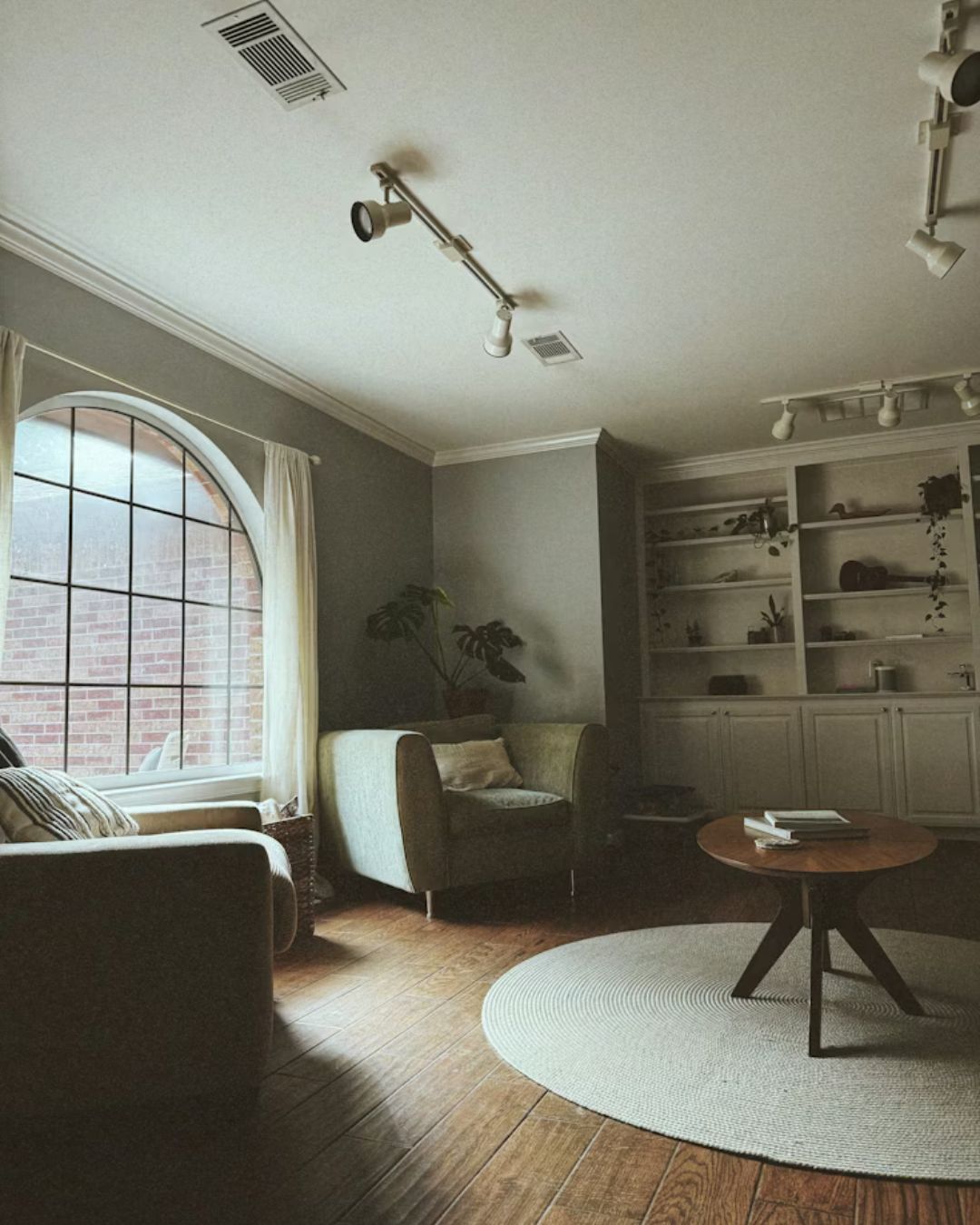
Designing the best layout for a small living room isn’t about squeezing furniture into every corner. It’s about understanding how you move through the space, how you use it daily, and how light interacts with the room.
In small living rooms, layout matters more than decor. You can have beautiful furniture, warm lighting, and stylish pieces — but if the layout doesn’t flow, the space will always feel cramped.
Over the years, I’ve tested different furniture arrangements in small apartments, and I’ve learned that smart placement changes everything. These are layout ideas that actually work in real homes, not just in perfectly staged magazine photos.
Before choosing a layout, it also helps to think about the overall style and atmosphere of your space. If you’re still working on the look and feel of your room, you might find inspiration in these small living room decor ideas.
1. The Floating Sofa Layout
Most people instinctively push the sofa against the wall in a small room. It feels logical — you’re trying to “save space.” But often, this creates a narrow walkway and an awkward center.
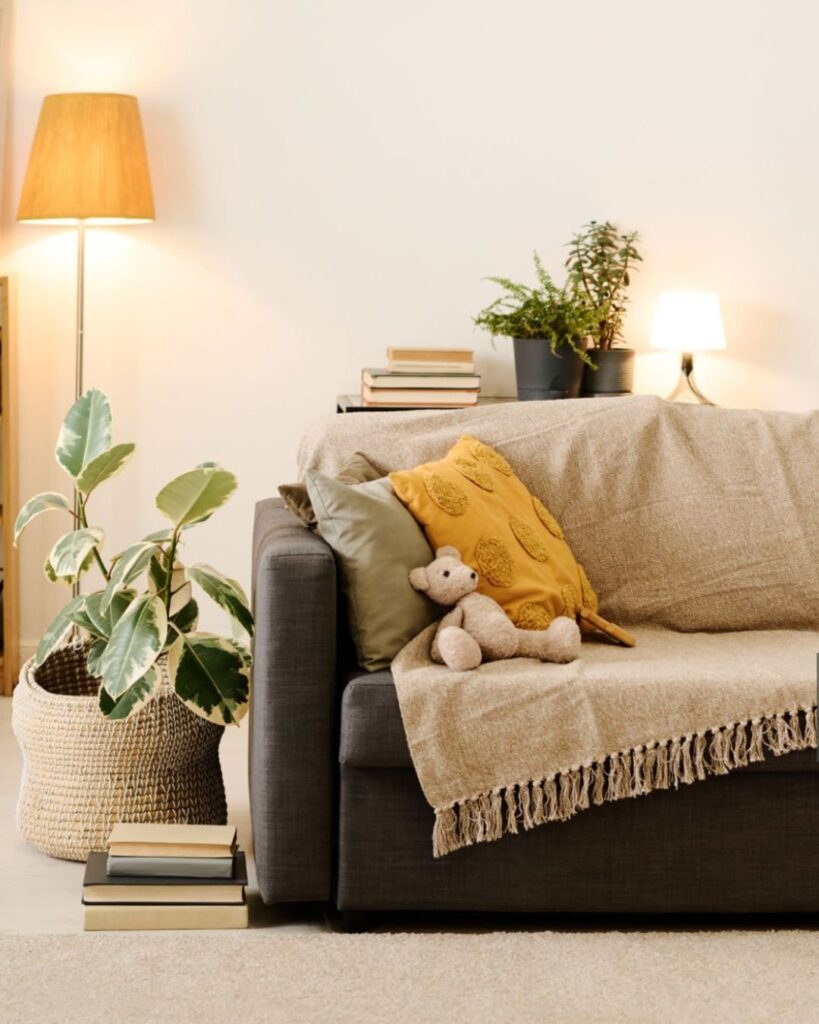
Floating the sofa slightly away from the wall can actually improve flow.
When you float the sofa:
- You create a defined seating zone.
- You allow better circulation behind it.
- The room feels intentional rather than crowded.
This layout works especially well in rectangular living rooms. If your living room is long and narrow, placing the sofa a few inches away from the wall and adding a slim console table behind it can create balance and subtle storage.
Tip: Make sure you leave at least 24 inches for a comfortable walkway.
A well-planned layout also makes it easier to integrate hidden storage solutions naturally.
2. The Corner Sofa Layout
If your room is square or nearly square, using a corner sectional can maximize seating without overwhelming the space.
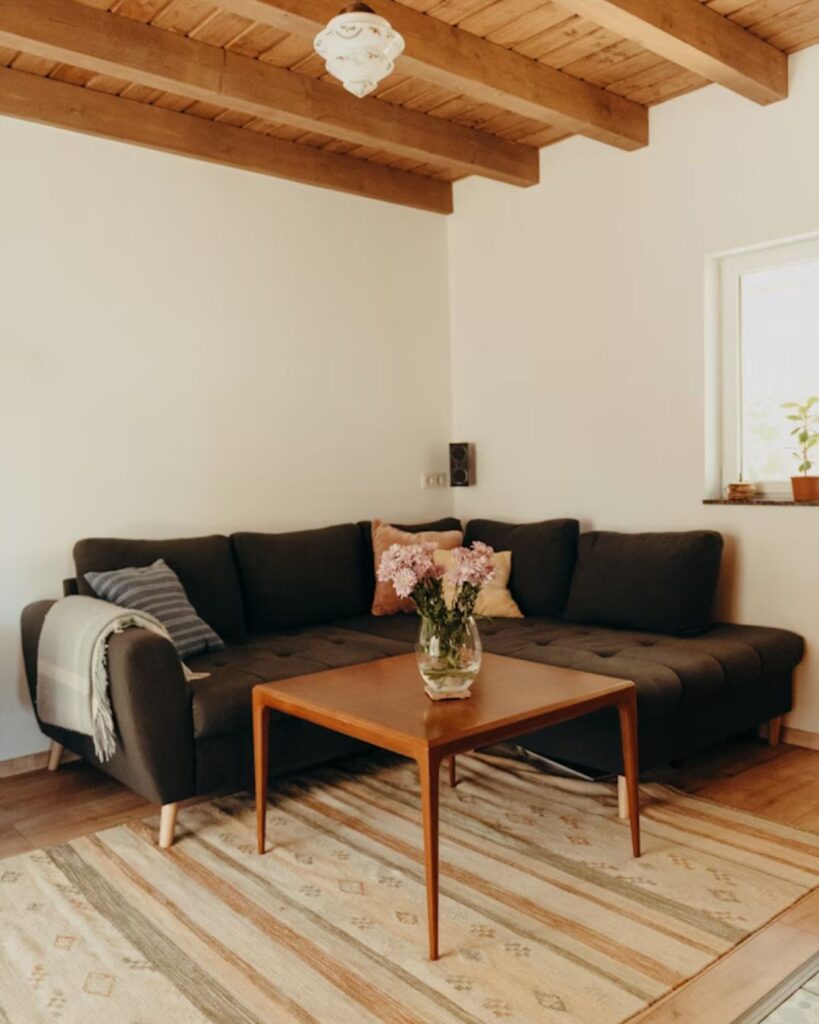
A corner sofa:
- Uses otherwise dead space.
- Keeps the center open.
- Creates a cozy conversation area.
To keep this layout from feeling heavy:
- Choose a light fabric.
- Avoid oversized armrests.
- Pair it with a small round coffee table to soften angles.
This layout is ideal if your small living room is also your main social space.
3. The Minimal Two-Seater Layout
In very small living rooms, oversized seating is the biggest mistake.
A compact two-seater sofa paired with one accent chair often feels more open than a bulky sectional. This setup:
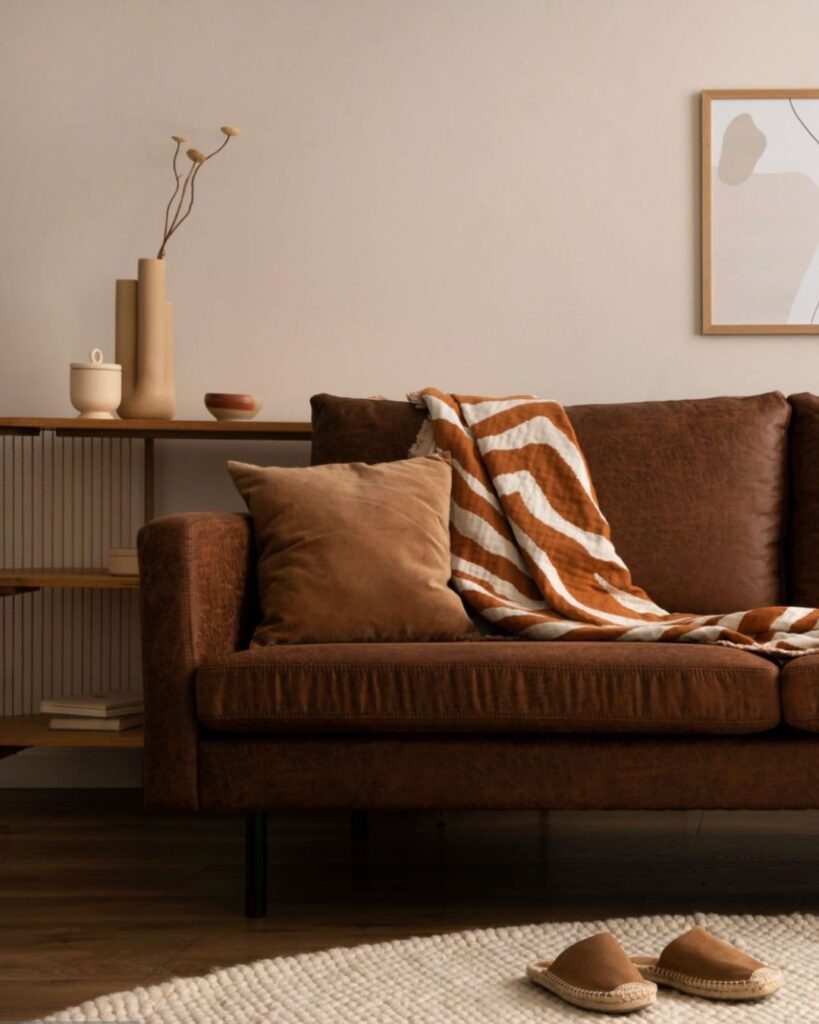
- Improves traffic flow.
- Creates visual breathing room.
- Makes the room look bigger.
Add a lightweight coffee table — glass or light wood works well — and a single area rug large enough to anchor both seating pieces.
Less furniture, but correctly scaled, almost always wins in small spaces.
4. The Wall-Mounted TV Layout
Media units can easily dominate a small room.
Mounting your TV on the wall:
- Frees floor space.
- Reduces visual weight.
- Allows for slimmer furniture underneath.
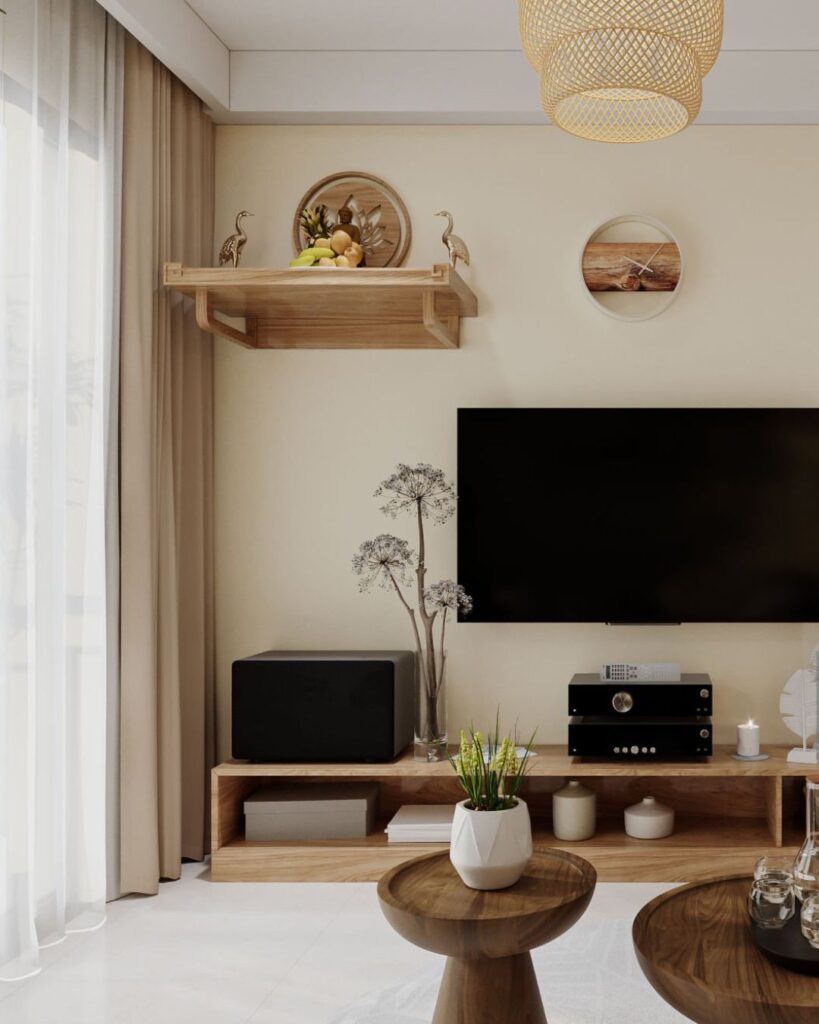
Instead of a large entertainment center, use a narrow console or floating shelf.
This layout works especially well in apartments under 600 square feet, where every inch counts.
Keep surrounding decor minimal so the TV wall doesn’t become cluttered.
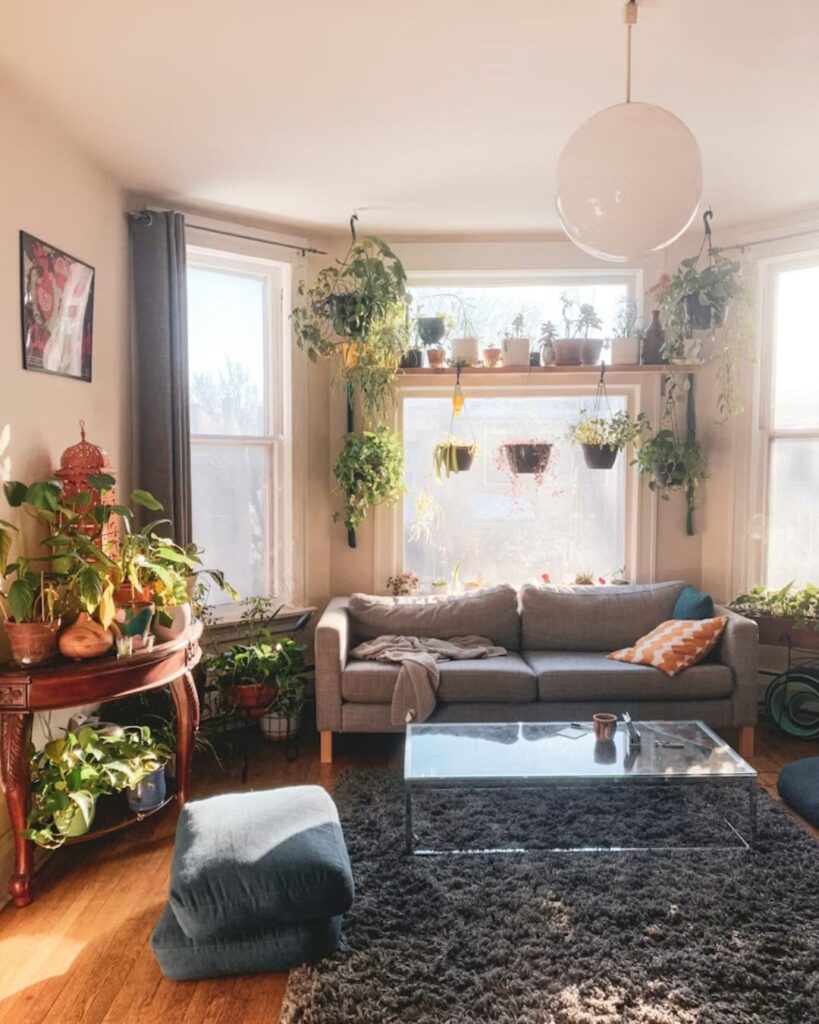
5. The Window-Focused Layout
Natural light is one of the biggest assets in a small living room.
Arrange your seating to face or sit perpendicular to the window whenever possible. Avoid blocking windows with tall shelving or heavy furniture.
A layout that embraces light:
- Makes the room feel larger.
- Improves mood.
- Creates natural focal points.
If you can, place a mirror across from the window to reflect even more light into the room.
6. The Open-Flow Layout (Living + Dining)
In open-plan apartments, layout becomes even more important.
Use furniture to define zones:
- A sofa acts as a divider between living and dining areas.
- A rug anchors the seating area.
- The dining table stays closer to the kitchen wall.
This subtle zoning prevents the apartment from feeling like one undefined space.
Even in small square footage, visual separation creates structure.
In small apartments, layout decisions affect not only the living room but the entire home. If you’re designing multiple areas, these cozy bedroom decor ideas for small apartments can help you create a cohesive look.
7. Common Layout Mistakes to Avoid
Some layout mistakes instantly make small living rooms feel smaller.
Avoid:
- Oversized sofas.
- Blocking main walkways.
- Too many small side tables.
- Dark, heavy furniture in tight spaces.
- Rugs that are too small.
Proportion matters more than price or style. When furniture fits the scale of the room, everything feels intentional.
Small Living Room Layout Checklist
Before finalizing your layout, check:
- Is there a clear walkway?
- Does the sofa match the room size?
- Is the rug large enough to anchor seating?
- Is lighting layered (not just overhead)?
- Are surfaces mostly uncluttered?
Small adjustments can dramatically change how the room feels.
Real Layout Examples by Room Shape
Not all small living rooms are shaped the same, and layout decisions should reflect that. Understanding your room’s shape can make furniture placement much easier.
Rectangular Living Room
If your room is long and narrow, avoid lining up all furniture along one wall. Instead:
- Float the sofa halfway into the room.
- Place a narrow console behind it.
- Keep walkways clear on one side.
This prevents the “bowling alley effect” and creates a defined seating zone.
Once you’ve chosen your layout, the next step is learning how to arrange furniture in a small living room effectively.
Square Living Room
Square rooms are easier to balance but can feel crowded quickly.
Try:
- A compact sectional in one corner.
- A round coffee table to soften angles.
- A single accent chair instead of two.
Symmetry works well in square layouts — but avoid oversized furniture.
Open-Plan Living Room
If your living room connects directly to the kitchen or dining area, zoning is essential.
Use:
- A rug to define the seating area.
- The back of the sofa as a divider.
- Lighting to create visual separation.
Even subtle layout choices can create structure without walls.
Frequently Asked Questions About Small Living Room Layouts
What is the best sofa placement in a small living room?
The best sofa placement allows for at least 24 inches of walkway space and does not block natural light. Floating the sofa slightly away from the wall often improves flow.
Should furniture touch the walls in a small living room?
Not always. While pushing furniture against walls can save space, it can also make the center feel empty and awkward. Floating key pieces can create better balance.
How do you make a small living room look bigger with layout?
Focus on:
- Clear walkways
- Light-colored furniture
- Properly sized rugs
- Mirrors near light sources
- Avoiding oversized pieces
Layout is more powerful than decor when it comes to making a space feel larger.
Final Thoughts
The best layout for a small living room depends on how you live. Do you host often? Watch TV every night? Work from the sofa? The right layout supports your daily habits.
When you focus on flow, proportion, and light, even the smallest living room can feel comfortable and functional.
A well-planned layout will always make a bigger difference than buying new decor.